
Pythagora
Build full-stack web apps through conversational AI inside your IDE
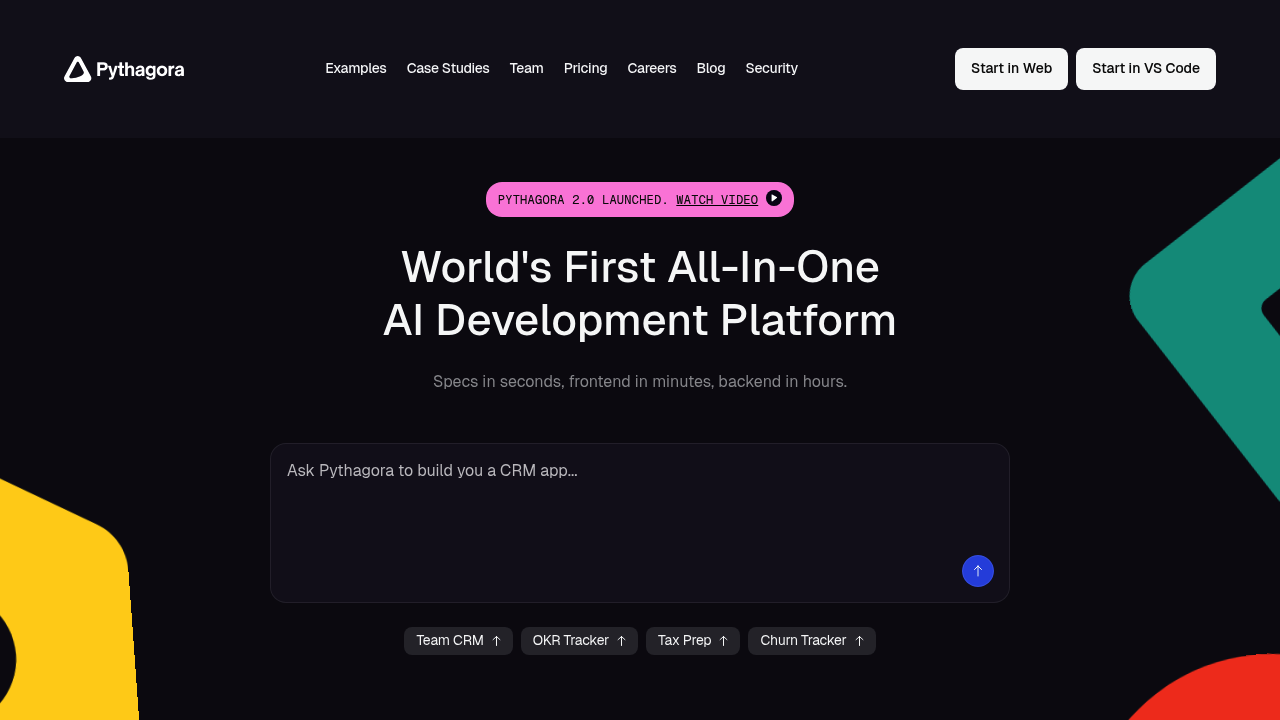
Pythagora - Lovable alternative
Pythagora is an all-in-one AI development platform that takes users from idea to production-ready app through natural conversation. It operates as an AI teammate inside VS Code or Cursor, powered by 14 specialized agents that handle planning, coding, reviewing, testing, debugging, and deploying full-stack web applications. The platform uses language models from OpenAI and Anthropic to generate React frontends and Node.js backends. Solo developers favor this Lovable alternative because it provides real debugging tools, breakpoint support, and complete code ownership without vendor lock-in.
Strengths
- Generates complete technical specifications before writing code, showing tasks, endpoints, and APIs upfront
- Includes professional debugging capabilities with logs, breakpoints, and pair programming support
- Built on GPT Pilot, an open-source project with over 32,000 GitHub stars
- Offers one-click AWS deployment while maintaining zero vendor lock-in
- Infrastructure-level privacy and security management for deployed applications
- Asks clarifying questions during development to ensure accurate implementation
Weaknesses
- Currently limited to React frontends and Node.js backends (Python support planned)
- AI handles approximately 95% of development work; remaining 5% requires developer intervention
- Free tier includes watermarks on deployed applications
- Free plan restricted to frontend-only applications
Best for
Developers who need full-stack applications with production-grade debugging tools and complete code ownership. Ideal for those comfortable working inside VS Code or Cursor who want transparent development processes.
Pricing plans
- Starter — Free — Frontend-only apps, requires own API keys, includes watermarks on deployments
- Pro — $49/month — Full-stack apps, database setup, no watermarks, 10M tokens included
- Premium — $89/month — All Pro features, 20M tokens included
- Enterprise — Custom pricing — Unlimited deployments, SSO, SLA, access control, audit logging
Tech details
- Type: IDE extension (VS Code, Cursor)
- IDEs: VS Code, Cursor
- Key features: 14 specialized AI agents, conversational development, specification generation, automatic debugging, database setup, one-click AWS deployment, breakpoint support, pair programming mode
- Privacy / hosting: Infrastructure-level access control and privacy enforcement managed by Pythagora. Zero vendor lock-in; users can deploy anywhere or take code elsewhere.
- Models / context window: Uses top-tier models from OpenAI and Anthropic. Specific context windows depend on underlying LLM provider.
When to choose this over Lovable
- You need professional debugging tools including breakpoints, logs, and step-through capabilities
- You want complete code ownership with the ability to deploy anywhere without platform restrictions
- You prefer working inside your existing IDE (VS Code or Cursor) rather than a web interface
When Lovable may be a better fit
- You need technologies beyond React and Node.js (Pythagora's current stack limitations)
- You want a platform that handles 100% of development without requiring any manual intervention
- You prefer not installing IDE extensions or using API keys
Conclusion
Pythagora positions itself as a comprehensive AI development platform for developers who want transparency and control. The 14-agent system provides end-to-end application development while maintaining visibility into every step. Real debugging tools and zero vendor lock-in appeal to developers building production applications. The free tier allows experimentation with frontend development before committing to paid plans for full-stack capabilities.
Sources
- Official site: https://www.pythagora.ai
- Docs: https://github.com/Pythagora-io/gpt-pilot
- Pricing: https://www.pythagora.ai/pricing
FAQ
What is Pythagora?
Pythagora is an AI development platform that functions as an IDE extension for VS Code and Cursor. It uses 14 specialized AI agents to build full-stack web applications through conversational prompts. The platform generates React frontends, Node.js backends, and handles deployment while providing professional debugging tools.
How does Pythagora compare to Lovable?
Pythagora operates inside your existing IDE with professional debugging capabilities and zero vendor lock-in. Lovable provides a web-based interface focused on rapid prototyping. Pythagora requires API keys and IDE setup but offers complete code ownership. Lovable streamlines the initial development experience without requiring local configuration.
What programming languages does Pythagora support?
Pythagora currently supports React for frontends and Node.js for backends. Python backend support is planned for future releases. The platform is designed for full-stack JavaScript/TypeScript web application development.
Can I use Pythagora for free?
Yes. The Starter plan is free and allows building frontend-only applications using your own API keys. Free deployments include watermarks. Upgrading to Pro ($49/month) removes watermarks and enables full-stack development with database support and included token allocation.
Does Pythagora require coding knowledge?
Pythagora automates approximately 95% of development work but expects developers to handle the remaining 5%. Basic development knowledge helps when manual intervention is needed. The platform provides debugging tools, breakpoints, and pair programming features that require some technical understanding.
How does Pythagora handle data privacy?
Pythagora enforces access control at the infrastructure level for deployed applications. Users maintain complete ownership of all generated code and can deploy anywhere without platform restrictions. The system manages security concerns to reduce vulnerability risks in deployed applications.