
Rocket.new
Contact
Rocket.new
AI app builder and vibe solutioning platform for teams that want research, deployment, and production-oriented app generation in one workflow.
Rocket.new as a Lovable Alternative: Comparison & Decision Guide (2026)
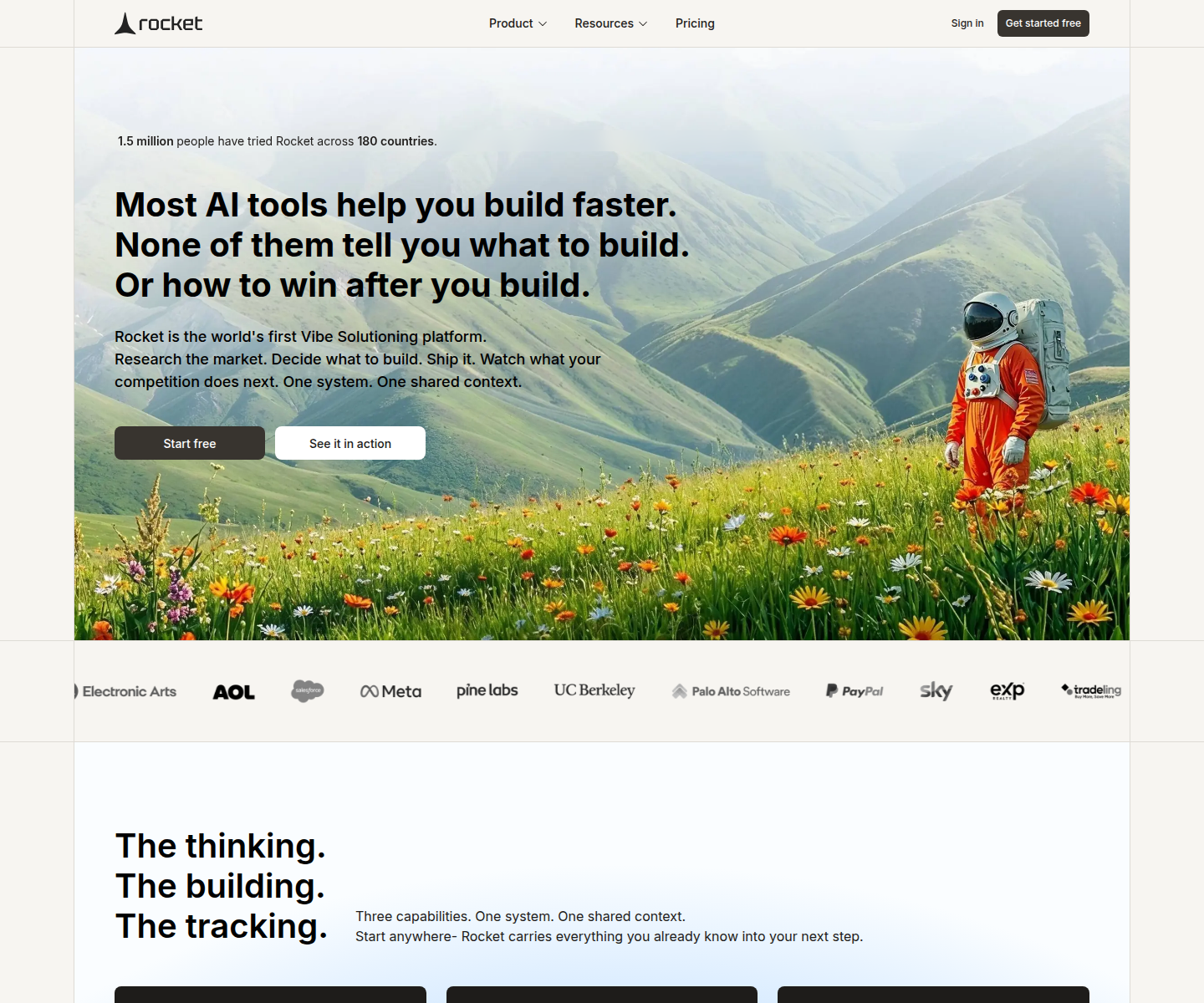
Rocket.new is a credible Lovable alternative for founders and teams who want more than prompt-to-UI speed, especially if they care about production deployment, broader product context, and one system for research plus build.
Compared with Lovable, Rocket.new stretches further into planning, competitive intelligence, and production-style delivery, but that wider scope can also feel heavier and less calm than Lovable's simpler first-build experience.
It is not the cleanest pick for users who only want a minimal prototype workflow or who dislike complex credit systems and multi-capability platforms.
Rocket.new vs. Lovable: Quick Comparison
| Decision area | Rocket.new | Lovable |
|---|---|---|
| Primary approach | AI app builder plus research and competitive-intelligence layer | Prompt-first app builder focused on fast prototype creation |
| No-code support | Strong prompt-first workflow, but broader feature scope can feel more complex | Cleaner starting point for beginners |
| Learning curve | Moderate because the platform covers Solve, Build, and Intelligence | Lower because the product story is narrower |
| Output stack | Production-ready websites, landing pages, web apps, and mobile apps | Lovable emphasizes app generation with a simpler mental model |
| AI workflow | Research a problem, generate a recommendation, then build from shared context | Prompt and iterate directly on the product |
| Visual editing | Less central than the broader app-building and research flow | A more obvious part of the core experience |
| Templates | Large template inventory mentioned in public materials | Lovable competes more on speed and editing loop than on inventory size |
| Deployment | Staging, production environment, and one-click deploy | Managed deployment path but less emphasis on broader operations |
| Custom domains | Supported in public pricing and marketing materials | Available through Lovable workflow, but not the main differentiator |
| Data and integrations | Connectors for internal systems, APIs, and third-party tools | Lovable is more streamlined but less explicitly positioned as a business-system hub |
| Collaboration | Unlimited team members on paid plans | Lovable is collaborative, but Rocket markets team usage more directly |
| Enterprise controls | SOC 2, ISO 27001, GDPR, CCPA, SSO/SAML, role-based access, audit logs | Lovable is less publicly framed around procurement-first enterprise control |
| Pricing model | Credits-based with plan tiers | Credits-based |
| Free plan | 20 one-time credits with no card required | Free entry depends on current Lovable offer |
| Paid plans | Pro $25, Rocket $50, Booster $250 per month | Paid access depends on Lovable tiers and credits |
| Post-build intelligence | Tracks competitors and research context inside the same platform | Lovable is more focused on building than intelligence |
What Rocket.new Does Differently
Rocket tries to solve the pre-build problem
Lovable assumes you mostly know what you want to build. Rocket markets problem framing, evidence, and recommendation generation before build mode, which is useful for founders who are still narrowing scope.
The platform is positioned as production-grade from the first prompt
Public messaging emphasizes staging, production environments, one-click deploy, connectors, and procurement-friendly controls. That makes Rocket easier to pitch to a team that wants to move beyond a prototype without swapping tools immediately.
Enterprise and team language is much stronger
Unlimited team members, SSO/SAML, audit logs, data localisation, and premium support are all documented as part of the plan matrix. Lovable feels more creator-friendly; Rocket feels more like a system a product team can justify in procurement conversations.
Competitive intelligence is part of the value proposition
Rocket is not only selling app generation. It is selling an operating loop where research, building, and monitoring competitors share context, which makes it distinct from most Lovable-style alternatives.
Known Limitations
- Pricing can become mentally expensive because the product uses credits across multiple capabilities, so experimentation and research share the same budget pressure.
- Lovable remains stronger for people who just want the shortest path from idea to a polished first version without extra product-strategy layers.
- Rocket's broad scope raises the chance of feature overload, especially for a solo builder who only needs UI and backend generation, not research and intelligence workflows.
- Because the positioning is so wide, teams still need to verify whether the deepest value comes from Build or from the larger Solve/Intelligence suite they may never fully use.
- The platform markets both web and mobile output, but product teams should still validate how much post-generation cleanup is needed before committing a serious production roadmap.
- If you dislike credits or want a calmer pricing story for repetitive prompt iteration, Rocket can feel more stressful than a simpler flat-workflow builder.
Who Should Choose Rocket.new Over Lovable?
- Choose Rocket.new over Lovable if your team wants one tool for research, recommendation framing, building, and ongoing competitive monitoring.
- Choose it if deployment, connectors, and enterprise controls matter earlier than they usually do in a prototype-first workflow.
- Choose it if you need a broader no-code-to-production bridge and you expect multiple stakeholders to work inside one platform.
- Choose it if your product process includes deciding what to build, not just generating what was already decided.
When Lovable Is Still the Better Choice
- Stay with Lovable if your real problem is not strategy but speed, and you already know what you want to prototype.
- Stay with Lovable if you value a tighter, more focused user experience over a platform that also tries to cover research and intelligence.
- Stay with Lovable if credit management across several product modes sounds more distracting than helpful.
- Stay with Lovable if non-technical teammates need the least intimidating possible workflow for generating and polishing an early app concept.
Pricing and Cost Predictability
Pricing is one of the main decision points when people compare Lovable alternatives, because the tool can feel cheap during the first demo and expensive once iteration becomes the real job. That makes the price model more important than the headline monthly fee.
Rocket.new documents a free plan with 20 one-time credits, a Pro plan at $25/month, a Rocket plan at $50/month, and a Booster plan at $250/month. Paid plans raise monthly credits and unlock the broader Solve, Build, and Intelligence workflow, while unlimited team members are included on paid tiers.
That structure is attractive for teams that want one shared budget across product research, building, and monitoring, but it can feel more stressful than Lovable if you only need generation and iteration. Rocket is easier to justify when the same credits actively replace other tools or meetings, not when they merely add another layer to a simple prototyping loop.
In short, both tools can beat Lovable on total value when their differentiators matter, but both can also lose badly on perceived value if you use them for work that Lovable already does simply and well.
Rocket.new for Teams, Workflows, and Long-Term Ownership
Decision-matrix angle
Rocket creates the most value when the team is uncertain about product direction and wants AI to support both thinking and implementation. If the idea is already well-defined, part of Rocket's differentiation becomes nice-to-have rather than essential.
Cost-at-scale view
The credit model is easier to justify when one budget covers research, build, and intelligence for several collaborators. For solo users who only need app generation, Lovable may still feel more efficient because fewer features compete for attention and credits.
Lock-in assessment
Rocket reduces workflow fragmentation by keeping problem framing and building in one system, but that can also increase process dependence on Rocket's own mental model. Buyers should choose it only if that broader operating loop is a real need, not just impressive packaging.
A useful buying question is this: what happens after the first exciting prompt? Lovable wins when the next step is still exploration. These alternatives win only when the next step is ownership, coordination, or a broader product workflow that Lovable does not center as strongly.
How Rocket.new Compares to Other Options in Directory 2930
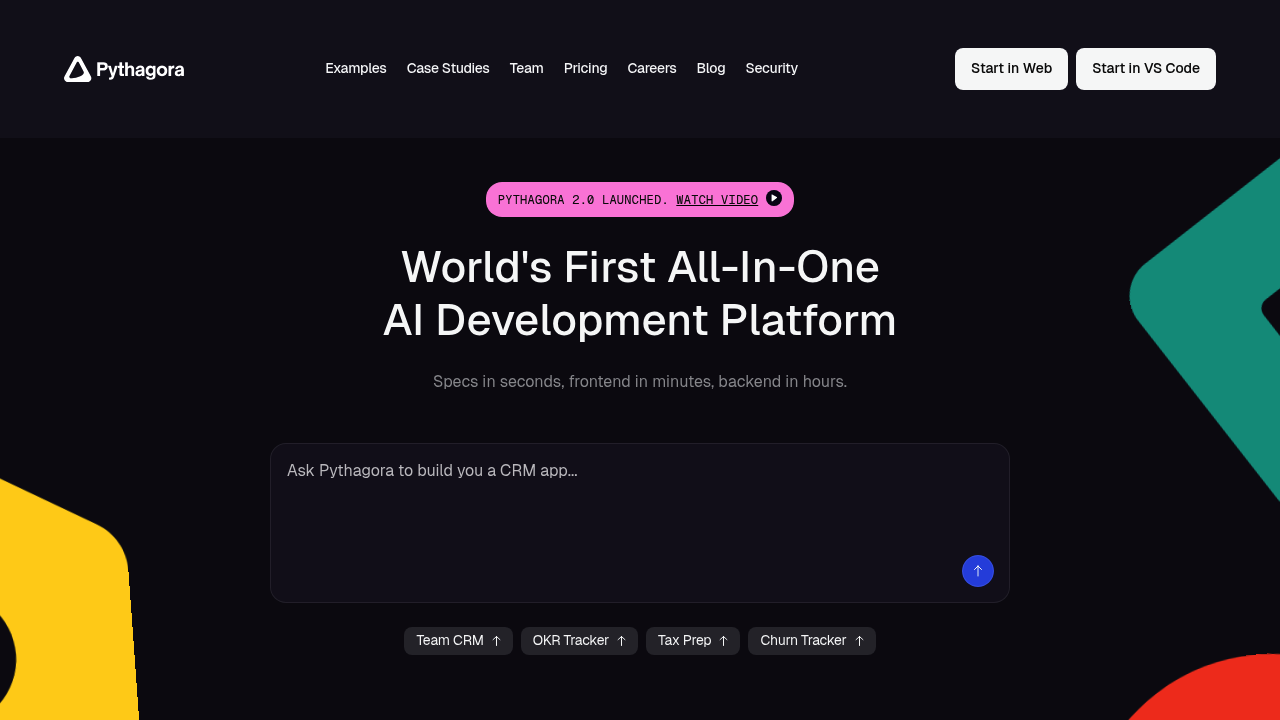
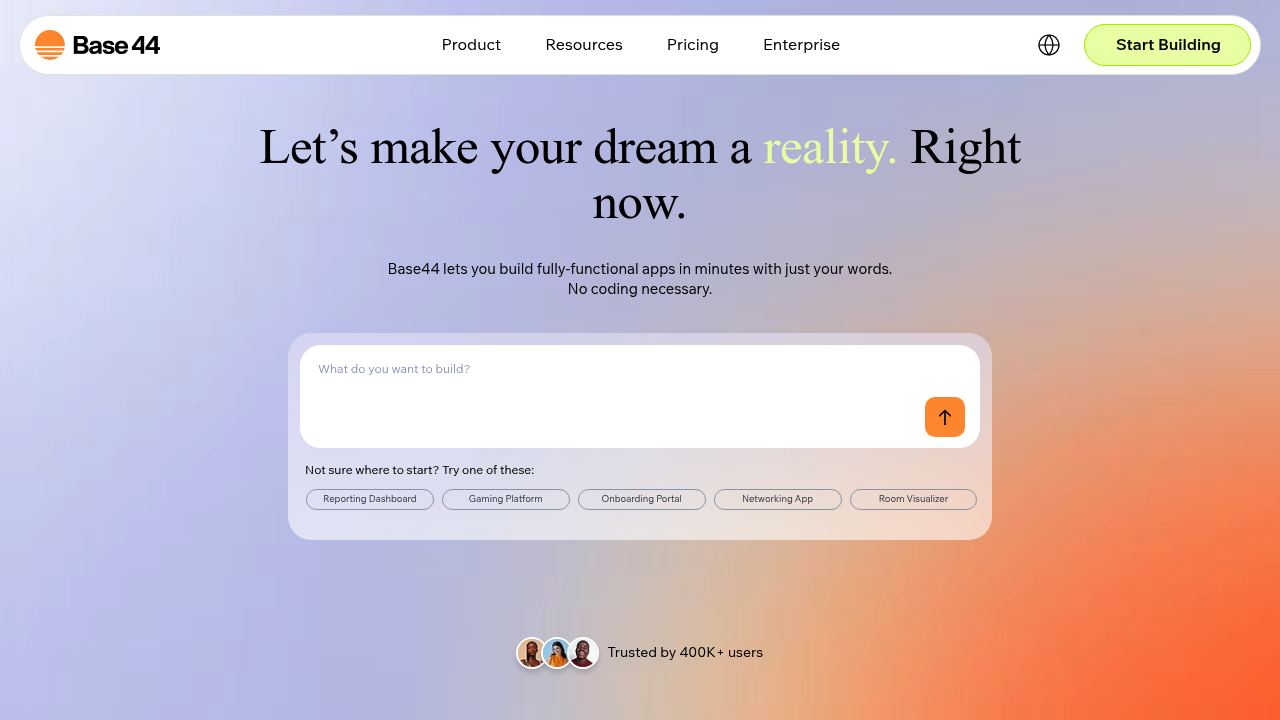
Rocket.new overlaps with Bolt, Replit, and Base44 on prompt-driven app generation, but it differentiates itself by adding research and competitive-intelligence layers around the build. That makes it broader than a classic builder, though not always simpler.
Compared with Bubble or Softr, Rocket is less about staying forever inside a visual app platform and more about compressing the early product loop from decision to deploy. Compared with Lovable, it appeals more to builders who want a bigger operating system for product work, not just a faster blank-canvas generator.
FAQ
Is Rocket.new a real Lovable alternative?
Yes, especially for teams that want broader product-building context than Lovable usually provides.
Is Rocket.new easier than Lovable?
Not exactly. Rocket is powerful, but its wider scope means Lovable still feels simpler for beginners.
Can Rocket.new build deployable apps?
Yes. Public pricing and docs state support for production-ready websites, web apps, landing pages, and mobile apps.
Does Rocket.new have a free plan?
Yes. Rocket documents a free plan with 20 one-time credits and no card required.
When should you avoid Rocket.new?
Avoid it when you want a narrow prototype-first workflow, dislike credit-heavy pricing logic, or do not need research and intelligence inside the same platform.
Sources and Proof Links
- Official site: https://www.rocket.new/
- Official pricing docs: https://docs.rocket.new/getting-started/pricing
- Community/discussion: https://www.reddit.com/r/VibeCodeDevs/comments/1npknhb/tried_rocketnew_for_app_building_sharing_my/
- Community/discussion: https://www.reddit.com/r/VibeCodeDevs/comments/1np5c6y/rocketnew_anyone_tried_it/
- Review signal: https://www.trustpilot.com/review/rocket.new